

Review: Documentary Film, Meant to Be
Reviewed by Guilherme Quireza
Warning: Contains spoilers for Meant to Be
Pogány Induló is only twenty, but he already looks worn down. In Hungary, he is famous, with a young audience that echoes his words back to him. It looks like the dream: fame, success, a launched career. Instead, success reached him before he knew what to do with it–and with it, the cost of success.
In Meant to Be, directed by Olivér Márk Tóth and produced by HBO, the young rapper moves through a life that has moved faster than he can process. Pogány Induló, born Marcell Szirmai, goes from a youthful hunger for recognition to a life organized around being seen. Since childhood, he has been in front of cameras, first as a YouTuber, chasing attention before he had any real protection from it. The privacy of a normal upbringing was gone early, and his life slowly took shape around visibility.
From the first scenes, the home around him is already coming apart. His parents argue often and the house becomes harder to live in. Slowly, the family learns how to live around something broken. Pogány tells the camera that he is fine after his parents announce their divorce, that it does not weigh on him. The camera closes in on his tired face, with no one else in the room. A detail shot shows his dirty, bruised feet while he lies curled up alone on the dressing-room couch, trying to rest.
Then he is back onstage. In “Diktátor,” he sings about looking in the mirror and asking, “Who am I?” The line lands differently after the scene at home. It is no longer just a young rapper playing tough. Even if he says he is fine, his songs prove him to be a liar at best, and someone with a deeper struggle that is likely to erupt if ignored. The lyrics begin to carry the heavy feeling Induló refused to utter.
As he moves into rap, Induló starts adopting a harder public surface. The performance grows heavier. It gives him another role to maintain. The more he tries to look untouchable, the more exposed the songs become. The hardness is real, but so is the hurt leaking through it.
The family changes with the career. As his success grows, school falls away. He leaves high school before graduating, and the decision does not feel like freedom exactly. His mother shows concern, but the family is also becoming more dependent on his success. Her worry has to live beside the fact that his success helps the family survive. The child’s dream has turned into work, and the work has started supporting a circle larger than himself. Now, as a young man, he moves through one stressful concert after another: phones always nearby, no time to rest.
The songs become an outlet for his worst feelings. For a while, music holds him together. Those challenging emotions become part of the act, and the audience asks for them again and again. The adoration gives him purpose.
Induló’s body starts to give way almost as quickly as his fame grows. He is still changing, and not in a clean upward line. The child who dreamed of fame and the rapper now filling huge venues sit beside each other, along with his ADHD, panic, substance use, and the increasing scrutiny around him. They keep rubbing against each other.
As the shows grow bigger, drugs and alcohol stop looking like occasional interruptions in his life and more like part of the rhythm that keeps him going. After performances, the camera often finds him collapsed backstage, emptied after another night that has taken too much from him. The bigger the stage gets, the more wrecked he looks once he leaves it. The mornings after are worse, but in a quieter way. The noise of the show is gone, but the disorder remains: rooms left in chaos, the dull aftermath of a night that was supposed to prove everything was working. They are part of the same life as the music and the fame.
This way of living enters the songs. The heavy drinking, the refusal to slow down, all of it becomes part of the image Pogány sells and then has to live inside. Even as his physical and mental health begin to fail, the lifestyle becomes harder to escape. He grows sadder, more isolated. His relationship with his girlfriend falls apart. The persona keeps expanding while the person inside it shrinks.
And curiously, his self-destructive style pulls the audience closer. People can relate to the chaos, to the struggle. The more he sinks, the larger the stages become. The damage starts to look like proof of authenticity, and then like something marketable.
Around him, collapse often looks like style. The exhaustion is not hidden, nor are the drugs, the anger, or the need to look untouchable. They seep into the music and the way people present themselves. The young people around him recognize themselves in his damage, and that recognition feels contaminated by glamour.
Hungary’s drug laws make that image riskier. With drug possession and the promotion of drug use now criminalized, the lifestyle around Induló becomes easier to turn into evidence. Already strained by fame, he also risks becoming an example. His private damage gets pulled into public debate, and even performance carries legal and political risk. Curiously, when asked by the end of the film about the future, Induló seems content if it all ended right now. He acknowledges that his life is not healthy and should not be replicated, but is not open to leaving it all behind himself.
At twenty, reinvention should be ordinary. For Induló, it looks forced and sped up by the presence of an audience. Today, his transformations are discussed and are attracting international public scrutiny, only to be folded back into the business around him almost as soon as they occur. Indeed, he is still forming. He is young. The world around him keeps asking for something finished: a star or a problem? Maybe even a symbol for Gen Z?
Calling him the voice of a generation risks taking too much from him. Still, the crowd gives the songs back to him as pressure. Pogány Induló gives shape to a restlessness that often appears as anger, and to a loneliness that often appears as numbness. The film exquisitely captures a young artist who is falling apart in public, while the world around him keeps treating the image as exciting.
Guilherme Quireza is a film critic and essayist. A contributing editor at PopMatters, his work has also appeared in Bright Lights Film Journal, C7nema, In Review Online, and High on Films. He writes about festival cinema, documentary, and international film, with a focus on political form, representation, and nonfiction cinema.
SUPPORT SEEFEST
Not a member yet? Become an art patron with other SEEfest arthouse aficionados in support of great events and programs. Our mission is to keep you informed about initiatives from our wide network of fellow cultural organizations.
We Welcome YOU!
Review: MyLifeandMyLife
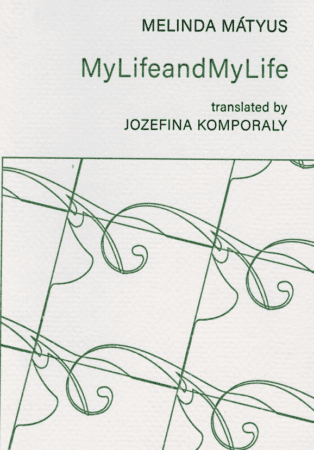
| Author | Melinda Mátyus |
| Genre | Fiction |
| ISBN | 978-1-946604-19-4 |
| Format | 140 pages |
| Language | English |
| Publisher | Ugly Duckling Presse |
Reviewed by Amanda L. Andrei
American poet Emily Dickinson once wrote to a family friend, “The heart wants what it wants – or else it does not care.” Her observation is apt for the stark and bold world of MyLifeandMyLife by Melinda Mátyus. Translated from the Hungarian by Jozefina Komporaly, this experimental novella from the perspective of a nameless woman in a fraught relationship pushes the boundaries of language by expressing the pressure and violence of doomed love.
The unnamed narrator becomes involved with a man named Márton who – despite their sexual relationship – she comes to know less and less. She meets him at movies, but they do not touch. For this woman, love is tantamount to the simplest of gestures, and her words cluster together as if whispered or sighed:
“Hold my hand.
I’dliketoholdyourhand, your hand, I’d like your hand.
I don’t have the courage to utter this.
I’d like my left hand to be in his right hand, so he can touch me with his fingers, first the middle of my palm, then the back of my hand, my wrist, and we canjustwalkandwalk, from one house to another, on and on, then turn around, and around again, cross to the other side, or stay on this side, our side.
To have my lefthandinyourrighthand, that’s what I’d like.” (Mátyus, 15)
Yet her wishes remain unfulfilled. Simplicity is overtaken by excess–in the form of art. In a series of power plays, Márton gifts the narrator expensive paintings that pierce her soul but further separate any semblance of emotional intimacy. “What kind of a world is the one where women fall in love and end up on their own?” she wonders (Mátyus, 16).
It’s a world full of off-colors and uncanny symbols in the artworks, such as blood spurting from a bride and a “whitewashedgrave” (Mátyus, 27). Over the course of a few years, the narrator receives four paintings: Bride’s Door by Helen Frankenthaler, Monitor by Robert Ryman, Running White by Ellsworth Kelly, and Self-Portrait by Paula Modersohn-Becker. It’s notable that the first three paintings are by American abstract artists, while the latter is by a German expressionist painter who was the first woman artist to paint a nude self-portrait (and who died suddenly due to childbirth complications).
The narrator realizes that with these paintings, “Márton is always sending me messages about love because he is incapable of talking about it” (Mátyus, 37). With contempt, she scratches them (her “signature”) with a red stiletto, a small vent of frustration against male expectations of female domesticity and sexuality. Although the final portrait activates her own self-recognition, her lover senses his loss of control, not only over the materiality of his gifts, but over her personhood. The confrontation is as chilling as the narrator’s interpretations of the paintings.
Komporaly’s translation renders a sense of fragility and powerlessness into a character who is wrestling with her contempt and the destructive mystery of eros. Komporaly’s translator’s note and András Visky’s afterword provide additional context to Mátyus’s work, noting the influence of theater and similarities to ancient tragedy. Indeed, with her flowing sentences and huddled words, the novella reads as a stage script for a poetically heightened solo show. It is not hard to imagine watching the narrator as a live actor testifying her innermost secrets, her quotidian observations, and her imminent despair. In a world where women fall in love and end up on their own, it is only their own words that will bear witness to their agony.

Ioana Bîrjan (b.1997) is the author of Vârsta Iubirii which translates into English as The Age of Love (Heyday Books, 2023). The novel is inspired by the Lady of the Camellias and the opera La traviata. She earned a bachelor’s degree from the Faculty of Letters, Ovidius University of Constanța, where she is now a graduate student in the Romanian Studies program.
Read more of her work in magazines, in anthologies, and on her blog: https://scrierileioanei.wordpress.com/
SUPPORT SEEFEST
Not a member yet? Become an art patron with other SEEfest arthouse aficionados in support of great events and programs. Our mission is to keep you informed about initiatives from our wide network of fellow cultural organizations.
We Welcome YOU!
Inventor of the Rubik’s Cube Gets a Movie
A Rubik’s Cube movie and game show are set to be in the works. Learn about the creator and the story behind his famed invention that will soon be on the screen.
The great inventor from South East Europe, Ernő Rubik is the Hungarian mastermind behind the beloved mechanical puzzle that has been sold more than 450M times around the world. He is also a 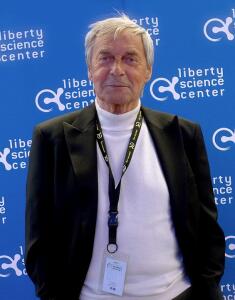 sculptor and architect and was a professor of architecture at the time when he was developing his ingenious creation. Born into a family of creators on July 13, 1944, in Budapest—his mother a poet and his father a flight engineer who designed gliders—it’s no wonder that he himself is a creator.
The idea for what would become the ‘Rubik’s Cube’ came to Rubik one day in his bedroom at his mother’s apartment in 1974 when he was just 29 years old. He was an instructor of interior design and was teaching his students descriptive geometry, which entails creating two-dimensional models to manually solve and understand three-dimensional geometry problems and their changeable nature. In an effort to help his students better understand these concepts, Rubik began the process of creating something that would be a tangible and movable geometric piece that would display them.
After seeing the potential of the puzzle being more than just a tool for learning, he patented it in 1975, and it was this initial mobile cube that he constructed by hand out of wooden blocks secured by rubber bands—which took him over a month to solve!—that would lead to the craze that would soon ensue.
Rubik began selling his “Magic Cube”, originally known as “Buvos Kocka” in Hungary three years later, which soon became a popular toy in the country during the late 1970s. Wanting to expand but being economically limited in Hungary, Rubik demonstrated his “Magic Cube” at toy fairs where he then licensed his puzzle to the U.S. company, Ideal Toys in 1979. From there the puzzle launched globally in 1980 under the rebranded name, “Rubik’s Cube”, and then things really took off. Within the first three years they had already sold over 100M cubes!
The Rubik’s Cube is a definitive staple of the 1980s, everyone was thoroughly captivated by the entertaining puzzle. Many speedcubing competitions began to pop up, and the first Rubik’s Cube World Championship took place in Budapest on June 5th, 1982. The winner of this initial competition was Minh Thai (USA) who solved the puzzle in 22.95 seconds, and ever since then enthusiasts have been competing to have the quickest solve time—which is now set at 3.47 seconds by Yusheng Du.
Ernő Rubik has created other three-dimensional geometric puzzles like the Rubik’s Magic, Rubik’s Snake, Rubik’s 360 along with some others, but by far his original creation with over 43 quintillion possible solutions has remained in the spotlight.
The Rubik’s Cube is such a beloved and well-known piece that has made many appearances in shows, films, and art throughout the years further making it a historical and pop culture classic. Now, Deadline has announced that producer Ashok Amritraj’s Hyde Park Entertainment Group will team up with Endeavor Content to produce a feature film on the famed cube. Amritraj will also be the executive producer for a Rubik’s Cube-esque TV game show.
Following the spark in classic games brought by the success of the Netflix Original, The Queen’s Gambit notes Variety, the Rubik’s Cube will now take the spotlight. A fan of the cube himself, Amritraj is quoted saying, “I’ve had a personal and nostalgic connection to the Rubik’s Cube from my early days in India. I’m thrilled to partner with Endeavor Content and Rubik’s/Smiley and look forward to creating a wonderful and complex Rubik’s universe.”
There’s still no word as to what exactly the feature will entail or look like, but one thing is for certain, the Rubik’s Cube will continue to be a globally well-known puzzle and toy for generations to come.
If you’d like to know more about Ernő Rubik and his relationship with the cube and the phenomenon, you can read his full interviews in CNA Lifestyle and The New York Times, or for a more in-depth look, you can read his book “Cubed: The Puzzle of Us All” .
SUPPORT SEEFEST
In order to help us meet our commitment to the 2021 Festival, we hope you will consider becoming a SEEfest Cine-Fan member to see us through as we continue to bring you the best film and culture from South East Europe.
Click here to stay in the know as SEEfest 2021 takes shape!
Mindset that knows no borders: Interview with Otto Banovits
Online cultural magazine Transatlantic Panorama (TAP) has just published an interview with film director Otto Banovits, whose short film Donkey Xote won Best Short Film Award at SEEfest 2017. He talks about his migratory life that took him from Sweden to Hungary to England and Los Angeles, and how this journey informed his work – and his mindset that knows no borders. Interviewed by Bettina Botos, publisher of TAP, Banovits touches upon many themes including, among others, form vs. content, quotes Hungarian writer István Eörsi, and references the 2016 Oscar-winning film Son of Saul by László Nemes when talking about the fate of refugees. You can read the entire interview here.
Gyula Gazdag receives Lifetime Achievement Award in Budapest
We are delighted to share with SEEfest fans the news from Budapest where our festival’s long time friend and renowned filmmaker, educator and mentor Gyula Gazdag was honored at the Budapest International Documentary Festival with the Lifetime Achievement Award. Congratulations!
Gyula Gazdag is a professor at UCLA School of Theater, Film and Television. He has served as the Artistic Director of the Sundance Filmmakers Lab since 1997. Gazdag has been a creative advisor at the Maurits Binger Film Institute in Amsterdam since 2002, and at the Script Station of the Berlinale Talent Campus since 2006. Daily Variety selected him as one of the ten best film teachers of 2011. His numerous feature films include A Hungarian Fairy Tale, winner of Best Feature Film of the Year of the Hungarian Film Critics and screened at Cannes Directors’ Fortnight, Stand Off, winner of a Special Jury Prize at the San Sebastian Festival, Lost Illusions, winner of Best Screenplay at the Hungarian Film Week, Swap, Singing on the Treadmill, which was banned in Hungary for 10 years, and The Whistling Cobblestone, which was banned from foreign exhibition for 12 years. His documentary work includes The Banquet, Package Tour and The Resolution, which was named one of the 100 best documentaries of all time by the International Documentary Association, and The Selection.The latter two were also banned in Communist Hungary for more than a decade.
SEEfest was honored to have Gyula Gazdag on the jury for Best Documentary Film, and as festival advisor and cultural ambassador. Most recently SEEfest presented Gazdag’s influential documentary, Package Tour at the Los Angeles Museum of the Holocaust in November 2017.
The World Traveler: Hungary
SEEfest Staff Writer | September 14, 2014, 11:28 AM
Kohary Winery – Eger, Hungary
Courtesy of Cathy and Carey Roth
We were on a Rick Steves’ Tour of Eastern Europe which included Hungary. Our tour bus pulled into the lovely vineyards and winery building where a fine lunch was served as we sampled the surprisingly good wines of Kohary. A wonderful violinist, Tony, serenaded us with soaring classic and contemporary melodies. The sun was bright and the setting was perfect to enjoy Hungarian country hospitality.


Gelato!
What a surprise! Krakow had by far the best gelato in Eastern Europe! We enjoyed the all-natural flavors and beautiful colors of their luscious creations! Who could resist? The shopkeepers tempted us with their wares overlooking the sidewalks, sometimes more than one per block! They used local summer fruits we wouldn’t find at home. Gelato was our afternoon treat.
In the evening, we dined at a charming outdoor restaurant on the square. Part of the ambiance was that the whole square was lined with such restaurants, so we were one of many couples having a romantic meal. From our table we could see the shiny white horse-drawn carriages going by. The horses were large, strong, and handsome; none of the run-down kind we’ve seen in many cities. We had already taken the carriage ride up to the castle to get the view. Later we walked down the cobblestone street to our hotel.
We also tasted Krakow home cooking at the Milk Bar, a hold-over from Communist days when people needed cheap food. It is still super inexpensive ($4.00 for lunch), and super good: a large roasted chicken leg, mashed potatoes, and choice of salad. Yum!


Support international cinema in Los Angeles and new film talent from South East Europe. Donate here!