

It All Starts Here… Well, Kind Of
Notes from My Year as a Sundance Institute Ignite x Adobe Fellow
Review by Leon Ristov
This time last year, I found out I had made it to the final round of interviews for the Sundance Institute Ignite x Adobe Fellowship. The Fellowship is a yearlong program that supports ten emerging filmmakers between the ages of 18–25, offers mentorship and workshops from Sundance alumni, and ends with a showcase at the Sundance Film Festival. Per the official website, the fellowship focuses on “supporting emerging documentary and fiction filmmakers from across the globe.” At the time, it felt like everything I had been working toward was distilled into this opportunity.
Flash forward to one year later—spring of 2026. I’m about to have my final check-in with Kat and Toby, the kind people who run the fellowship. I’ve spent a year as a Sundance Institute Ignite x Adobe Fellow, and I’m receiving eager messages from this year’s interviewees. They want advice on their applications. I remember being on the other side, hoping this opportunity would work out for me. The fellowship occupied so much space in my mind. Before I even knew the outcome, I had already imagined every version of it—being rejected, being accepted, sharing the news with others, or quietly holding onto disappointment. I played each scenario in my head so many times that by the time I received my acceptance letter, it felt strangely familiar, almost like I had already celebrated it. In retrospect, that might have been the perfect mindset to carry into this experience.
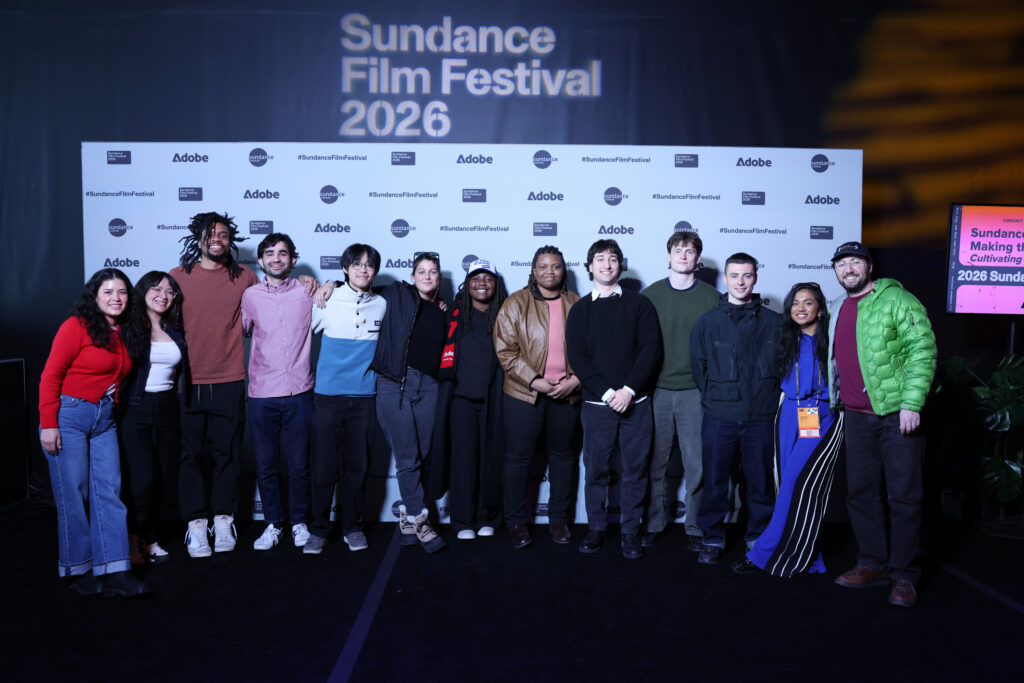
During the fellowship, our first kickoff lab took place at MASS MoCA in North Adams, Massachusetts. We were put up at the Porches Inn, a hotel made up of conjoined Victorian-style row houses painted in bright colors, complete with a sauna and pool that quickly became everyone’s favorite spot. I met the nine other fellows, and we clicked immediately, staying up late most nights, laughing and chatting in our swimsuits. The cohort hailed from all over—Canada, Costa Rica, India, Korea, Ireland, the U.S., and my country, North Macedonia. Over the course of a few very hot days, we shared our work and listened to Sundance Institute alumni speak, learning from filmmakers at various stages of their careers.
Gathered in the spacious, industrial rooms of MASS MoCA that somehow felt intimate, we listened to first-time directors who had achieved extraordinary success, and producers with longevity in the independent filmmaking world that one can only dream of. The humility in the room stood out to me the most. Mentors spoke about the effort and setbacks that come with making a first feature, as well as the even greater hurdles of making a second one.
“There was no illusion of a straight path or guaranteed success, just honest conversations about persistence, adaptability, and finding your way through uncertainty.”
It was then that I realized that the fellowship didn’t feel like all I had made it up to be in my head. It felt better than that—real people offering real advice.
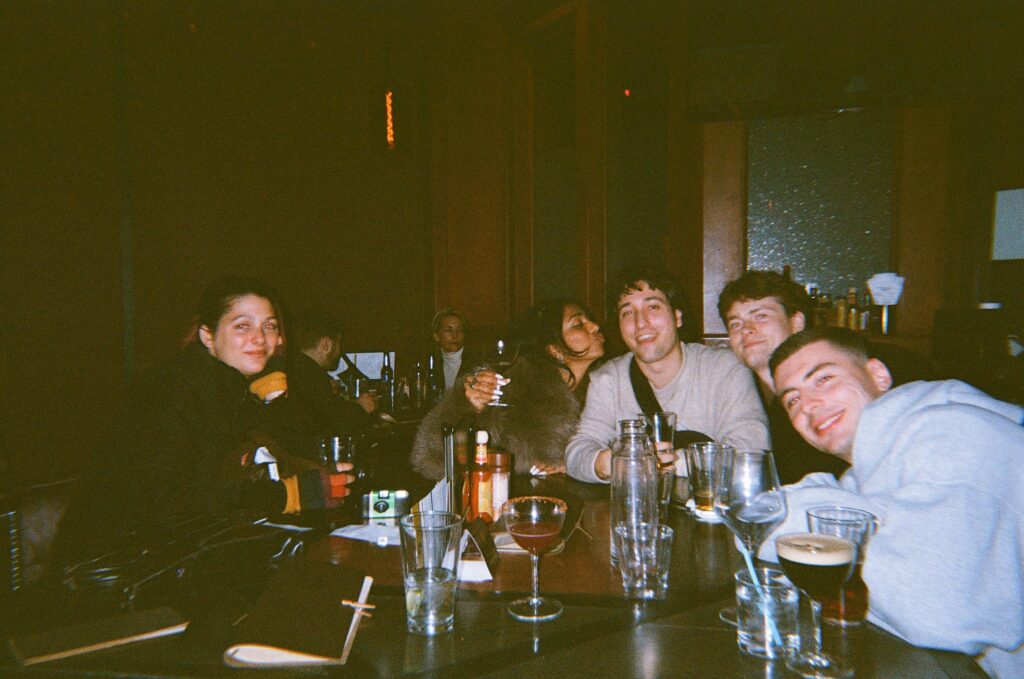
In January 2026, I attended my first Sundance Film Festival thanks to the fellowship. I booked an Airbnb with most of the fellows, extending our stay beyond the four days scheduled for fellowship activities. “Guys… it all starts here,” Brittany would say jokingly, pausing for dramatic effect after “guys.” She was undoubtedly the funniest from our group—and probably in any group she’s part of. Still, there was some truth to the pomp. It was a historic edition—the final festival held in Park City, buzzing with excitement and nostalgia ahead of the festival’s move to Colorado in 2027. We had the chance to meet with studios and agents, attend a Janelle Monáe DJ set, and walk along the iconic (albeit freezing) Main Street, occasionally spotting recognizable faces from film and television.
But what stayed with me most weren’t those larger moments. It was the things that felt familiar. My friends Anooya Swamy and Raman Nimmala had their short films,Pankaja and O’Sey Balamma, premiering in the Official Selection. Marija Dimitrova, a seasoned Macedonian producer I was lucky to catch up with over a quick coffee, co-produced Shame and Money, the Grand Jury Prize-winning Kosovar film in the International Feature Program. My favorite film at the festival, Filipiñana—also a Grand Jury Prize-winner—was represented by MAGNIFY, the global sales arm of Magnolia Pictures, where I had previously interned. Attending these screenings became some of the most meaningful parts of the festival for me—moments of reconnecting and celebrating with people whose work I had followed closely, whose success didn’t feel foreign or overnight, but tangible and earned.
When my short film, Nikola, Nikola, screened during the Ignite showcase, projected on a large Sundance screen alongside the work of the other fellows, I found myself less focused on my achievement than on the collective strength of our films.
“There was something special about seeing all our films together—each one distinct, yet complementary to the others.”
I felt grateful for the cohort that Kat and Toby had brought together, a group of filmmakers who genuinely supported and believed in each other’s work.
After the screening, aspiring filmmakers approached us with questions about applying to the fellowship, reminding me of how I had once imagined this moment from afar. But some of the most meaningful conversations happened among the fellows ourselves. In the minutes after the screening, we found ourselves complimenting each other’s films as if we were discovering them for the first time—sharing words of encouragement we had already said many times before.
“It” definitely did not all start here, despite our (at that point) running joke that it did. The fellowship was far from an overnight whirlwind of success. It was more of a coming together—a chance to be present with others on the same journey, and to find grounding in that shared experience.
Things were already in motion. We just got to pause and witness it together.

Leon Ristov is a Macedonian filmmaker based in New York. His work has been recognized by the Sundance Institute Ignite Fellowship, Clermont-Ferrand Euro Connection, and Sony Pictures Classics’ Marcie Bloom Fellowship. His films have screened at the Sarajevo Film Festival, SEEfest, and over 25 festivals worldwide, winning multiple awards. He holds a master of fine arts in screenwriting and directing from Columbia University and a bachelor of arts in film studies from Wesleyan University.
Photo Credit: Ana Vchkova
SUPPORT SEEFEST
Not a member yet? Become an art patron with other SEEfest arthouse aficionados in support of great events and programs. Our mission is to keep you informed about initiatives from our wide network of fellow cultural organizations.
We Welcome YOU!
Review: Documentary Film, Meant to Be
Reviewed by Guilherme Quireza
Warning: Contains spoilers for Meant to Be
Pogány Induló is only twenty, but he already looks worn down. In Hungary, he is famous, with a young audience that echoes his words back to him. It looks like the dream: fame, success, a launched career. Instead, success reached him before he knew what to do with it–and with it, the cost of success.
In Meant to Be, directed by Olivér Márk Tóth and produced by HBO, the young rapper moves through a life that has moved faster than he can process. Pogány Induló, born Marcell Szirmai, goes from a youthful hunger for recognition to a life organized around being seen. Since childhood, he has been in front of cameras, first as a YouTuber, chasing attention before he had any real protection from it. The privacy of a normal upbringing was gone early, and his life slowly took shape around visibility.
From the first scenes, the home around him is already coming apart. His parents argue often and the house becomes harder to live in. Slowly, the family learns how to live around something broken. Pogány tells the camera that he is fine after his parents announce their divorce, that it does not weigh on him. The camera closes in on his tired face, with no one else in the room. A detail shot shows his dirty, bruised feet while he lies curled up alone on the dressing-room couch, trying to rest.
Then he is back onstage. In “Diktátor,” he sings about looking in the mirror and asking, “Who am I?” The line lands differently after the scene at home. It is no longer just a young rapper playing tough. Even if he says he is fine, his songs prove him to be a liar at best, and someone with a deeper struggle that is likely to erupt if ignored. The lyrics begin to carry the heavy feeling Induló refused to utter.
As he moves into rap, Induló starts adopting a harder public surface. The performance grows heavier. It gives him another role to maintain. The more he tries to look untouchable, the more exposed the songs become. The hardness is real, but so is the hurt leaking through it.
The family changes with the career. As his success grows, school falls away. He leaves high school before graduating, and the decision does not feel like freedom exactly. His mother shows concern, but the family is also becoming more dependent on his success. Her worry has to live beside the fact that his success helps the family survive. The child’s dream has turned into work, and the work has started supporting a circle larger than himself. Now, as a young man, he moves through one stressful concert after another: phones always nearby, no time to rest.
The songs become an outlet for his worst feelings. For a while, music holds him together. Those challenging emotions become part of the act, and the audience asks for them again and again. The adoration gives him purpose.
Induló’s body starts to give way almost as quickly as his fame grows. He is still changing, and not in a clean upward line. The child who dreamed of fame and the rapper now filling huge venues sit beside each other, along with his ADHD, panic, substance use, and the increasing scrutiny around him. They keep rubbing against each other.
As the shows grow bigger, drugs and alcohol stop looking like occasional interruptions in his life and more like part of the rhythm that keeps him going. After performances, the camera often finds him collapsed backstage, emptied after another night that has taken too much from him. The bigger the stage gets, the more wrecked he looks once he leaves it. The mornings after are worse, but in a quieter way. The noise of the show is gone, but the disorder remains: rooms left in chaos, the dull aftermath of a night that was supposed to prove everything was working. They are part of the same life as the music and the fame.
This way of living enters the songs. The heavy drinking, the refusal to slow down, all of it becomes part of the image Pogány sells and then has to live inside. Even as his physical and mental health begin to fail, the lifestyle becomes harder to escape. He grows sadder, more isolated. His relationship with his girlfriend falls apart. The persona keeps expanding while the person inside it shrinks.
And curiously, his self-destructive style pulls the audience closer. People can relate to the chaos, to the struggle. The more he sinks, the larger the stages become. The damage starts to look like proof of authenticity, and then like something marketable.
Around him, collapse often looks like style. The exhaustion is not hidden, nor are the drugs, the anger, or the need to look untouchable. They seep into the music and the way people present themselves. The young people around him recognize themselves in his damage, and that recognition feels contaminated by glamour.
Hungary’s drug laws make that image riskier. With drug possession and the promotion of drug use now criminalized, the lifestyle around Induló becomes easier to turn into evidence. Already strained by fame, he also risks becoming an example. His private damage gets pulled into public debate, and even performance carries legal and political risk. Curiously, when asked by the end of the film about the future, Induló seems content if it all ended right now. He acknowledges that his life is not healthy and should not be replicated, but is not open to leaving it all behind himself.
At twenty, reinvention should be ordinary. For Induló, it looks forced and sped up by the presence of an audience. Today, his transformations are discussed and are attracting international public scrutiny, only to be folded back into the business around him almost as soon as they occur. Indeed, he is still forming. He is young. The world around him keeps asking for something finished: a star or a problem? Maybe even a symbol for Gen Z?
Calling him the voice of a generation risks taking too much from him. Still, the crowd gives the songs back to him as pressure. Pogány Induló gives shape to a restlessness that often appears as anger, and to a loneliness that often appears as numbness. The film exquisitely captures a young artist who is falling apart in public, while the world around him keeps treating the image as exciting.
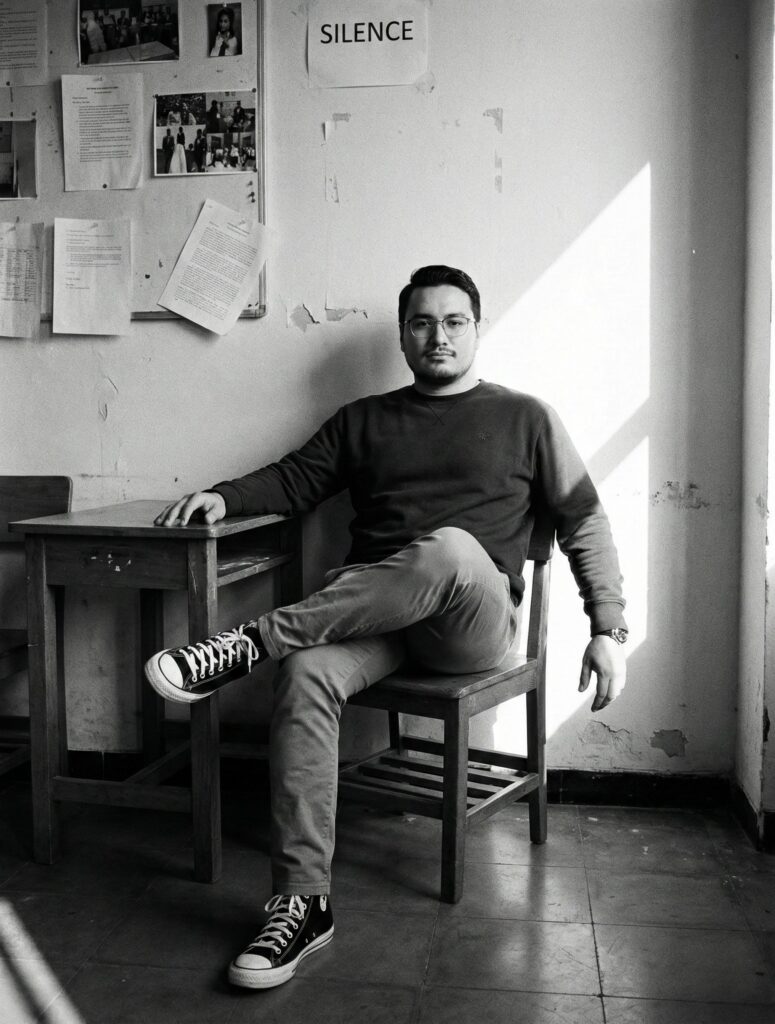
Guilherme Quireza is a film critic and essayist. A contributing editor at PopMatters, his work has also appeared in Bright Lights Film Journal, C7nema, In Review Online, and High on Films. He writes about festival cinema, documentary, and international film, with a focus on political form, representation, and nonfiction cinema.
SUPPORT SEEFEST
Not a member yet? Become an art patron with other SEEfest arthouse aficionados in support of great events and programs. Our mission is to keep you informed about initiatives from our wide network of fellow cultural organizations.
We Welcome YOU!
Review: Anora
Reviewed by Aleksandr Tverdokhleb
Warning: Contains spoilers for Anora
Weeks have passed since the 2025 Academy Awards ceremony, which took place on March 2 at the Dolby Theatre in Los Angeles. The film Anora by Sean Baker was the evening’s triumph, winning five statuettes out of six nominations, making it the most awarded film at the event. The movie tells the story of Annie Mikheeva (played by Mikey Madison, who won an Oscar for this role), a prostitute and daughter of Russian-speaking immigrants. While working at a strip club, she meets Ivan (Mark Eidelstein), the son of Russian oligarchs. He offers her money to live together, later confesses his love, and proposes to her despite the radical disapproval of his parents (Aleksei Serebryakov and Darya Ekamasova, respectively).
Even if you haven’t heard about Anora before, its cast alone highlights its uniqueness: among the lead actors, only Mikey Madison is American; the other key characters are played by four Russian actors and two Armenian-born performers. This gives the film a distinctive atmosphere, reflected not only in the script (a quarter of the dialogue is in Russian) but also in its rich Eastern European aesthetic. This is evident not only in the characters’ costumes, which differ significantly from the American crowd, but also in certain small habits that are very familiar to Eastern European residents. For example, at one point in a cafe, Toros (Karen Karagulian) starts scolding the nearby American youth, using extremely stereotypical phrases about how the new generation is “not what it used to be” and “doesn’t respect their elders,” even though the American kids have done almost nothing. I think this is very familiar to those who grew up in Eastern Europe and often faced judgment from older generations in public places, hearing similar phrases—even when they had done nothing at all. It’s also noticeable that the Armenian characters park terribly every time, breaking multiple rules and even getting fined once, which feels completely natural, given that they come from a country that is significantly less car-oriented than the U.S.
At first glance, the film seems to follow the signature style of Sean Baker’s directing. His previous works—Tangerine, The Florida Project, and Red Rocket—focus on marginalized communities, with the protagonists of Tangerine and Red Rocket also tied to the adult entertainment industry. However, Anora takes a slightly different path:within the first 20 minutes of the film, the heroine finds herself in a world of luxurious interiors and ultra-wealthy elites.One of the film’s standout features is its visual style, which earned an Oscar for Best Editing. Baker has always been known for his experimental approach to cinematography—for example, Tangerine was shot on a modified iPhone camera to enhance realism. In Anora, he employs various unique cinematographic techniques. In an interview with Hammer To Nail, the director revealed that he deliberately changed film stock and lenses to emphasize color contrasts, with warm tones giving way to cold ones, creating a visual transition between different worlds. Additionally, this helped evoke a 1970s aesthetic, with the set design carefully chosen to match this effect.
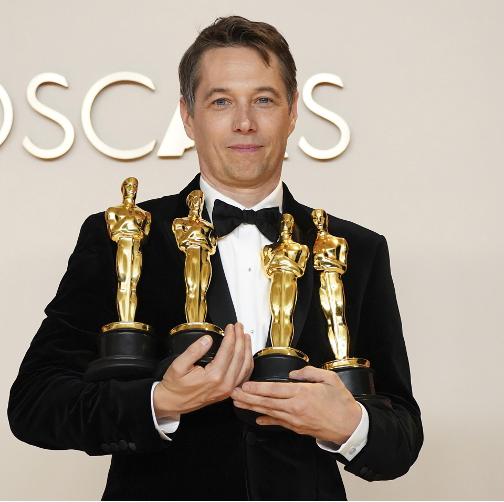
eight films, he was the director, screenwriter, producer,
and editor.
Anora has a distinct, three-part structure. The first part is an erotic melodrama centered on the relationship between Annie and Ivan. This is the weakest segment of the film. The second is a burlesque comedy that begins with the arrival of Armenian “bodyguards” (Karen Karagulian and Vache Tovmasyan) and the Russian “bouncer” Igor (played by Oscar nominee for Best Supporting Actor, Yuri Borisov), whom Ivan’s parents send to New York to annul his marriage to Annie. The third part is a drama, though not without humorous moments—Baker generally avoids pure drama, preferring to balance intense scenes with irony. All three parts share a similar narrative structure, featuring abrupt transitions from loud scenes where characters shout at each other, to quiet episodes in which they sluggishly chew food, watch TV, or engage in routine activities with almost no dialogue.
Overall, the film flips the classic Cinderella storyline on its head. We’ve seen this before in the 1990 film Pretty Woman: a young woman from the social bottom falls in love with a wealthy man and enters the world of the rich. But instead of happiness, as in traditional fairy tales, she discovers that her chosen lover or suitor—who has only known her for a couple of weeks—does not truly love her. And both protagonists of these two Cinderella-esque films realize that money is not a cure-all for life’s problems.
In 2025, viewers of Anora already understand the unrealistic nature of tales like Cinderella and may not expect a happy ending for Anie and Ivan’s relationship. It doesn’t help that Ivan is portrayed throughout the film as an infantile,thoughtless teenager. However, the goal of the film is not to surprise the audience with the sudden realization that marrying someone after two weeks, especially when that person behaves like a child, is a bad idea. Instead, Sean Baker’s aim is to highlight the doomed nature of this marriage via the characters who become the emotional core in the second half of the film: the Armenian “fixers” Toros (Karen Karagulian) and Garnik (Vache Tovmasyan), as well as the Russian Igor (Yura Borisov). These latter characters have incredible charisma. Given that a large portion of their dialogue was improvised, the actors demonstrate remarkable skill. Sean Baker does not speak Russian, so the delivery of lines relied entirely on the actors themselves. The choice of words and intonations was up to them, and in this regard, all Russian-speaking characters showcase an exceptional level of acting.
So what is Anora really about? Neither Ivan nor Anie evokes strong positive emotions at the beginning of the story—one is an immature fool, and the other is overly trusting and at times overly hysterical. Watching the first third of the film, as a viewer, you want to tell Anie not to be so naive when Ivan repeatedly proves how irresponsible he is. And you also want to tell Ivan that to stop acting like a child. When the characters played by Vache Tovmasyan, Yura Borisov, and Karen Karagulian appear, they do exactly that—they voice the concerns of the audience, and interfere with the romance. This strengthens the viewers’ emotional connection with them. On top of that, they deliver almost all of the film’s best jokes. Even when reading American reviews of the movie (for example, on IMDb), it’s clear that even those who didn’t like the film still appreciated the outstanding performances of the Russian-speaking actors.Anora does not just tell the story of Mikey Madison’s heroine—it also presents a classic Hollywood narrative through the eyes of people who usually remain in the background: the employees of wealthy Russian oligarchs, who may appear to have no “real” influence and who work for extremely unpleasant individuals, but still try to conduct themselves with dignity. These characters may be easier to relate to, for the audience
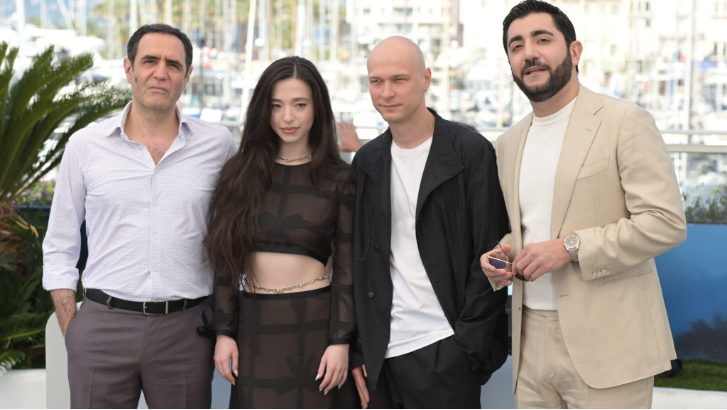
Karen Karagulian, Mikey Madison, Yura Borisov, and
Vache Tovmasyan
Anora is not without its flaws. The excessively sharp editing and the alternating loud and silent scenes may feel exhausting. Additionally, in the first third of the film, the main characters can be irritating at times. However, these shortcomings pale in comparison to the film’s strengths, and Sean Baker absolutely deserved those Oscars.
As for the actors from Southeastern Europe, they deserve the applause too. They not only delivered phenomenal performances, but also became the emotional heart of the film. Thanks to them, Anora stands out from the sea of films released in the past year, serving as a brilliant example of how Russian language and Russian-speaking actors can be used in cinema in a way that feels natural, effective, and well-done. It is especially gratifying to see that Western audiences have also appreciated these performances, confirming just how exceptional they truly are.
Aleksandr Tverdokhleb is a student at Pomona College who is studying cognitive science. He reviews films that reveal how members of one culture perceive and interpret a culture less familiar to them. Additionally, he enjoys exploring the phenomenon of Eastern European diasporas in the United States.
SUPPORT SEEFEST
Not a member yet? Become an art patron with other SEEfest arthouse aficionados in support of great events and programs. Our mission is to keep you informed about initiatives from our wide network of fellow cultural organizations.
We Welcome YOU!
The Frontier Café – Conversation with Daylyn Paul
Working in a Post-Covid Film Industry
Please subscribe to our new podcast. Available on Anchor, Spotify, Amazon Music, Google Podcast, Castbox, Pocket Cast, Radio Public, YouTube

In this episode of Frontier Cafe, host Milan Zivkovic spoke with fellow CSULB alum Daylyn Paul, a writer and filmmaker based out of Los Angeles. Recorded at Aroma Cafe in Los Angeles, Daylyn and Milan discuss working in a post-Covid film industry, historical representation in films, and how writers function in various productions. We hope you enjoy this discussion between two peers branching into different paths!
About The Guest
Daylyn Paul is a director and writer based out of Los Angeles. A graduate of California State University Long Beach and a recipient of the HFPA directing and writing grant, Daylyn has over eight years of experience in the entertainment industry. She currently works at CBS and ABC as a production assistant. Her previous works include the short film Nothing There Sings (2019) and the TV movie Suggestion Box (2019). Additionally, Daylyn was a casting assistant for the 2019 short film Flawless. She also works as a writer for an Amazon podcast set to release later in 2022.
Connect with Daylyn Paul on Social
SUPPORT SEEFEST
Not a member yet? Become an art patron with other SEEfest arthouse aficionados in support of great events and programs. Our mission is to keep you informed about initiatives from our wide network of fellow cultural organizations.
We Welcome YOU!
Gyula Gazdag receives Lifetime Achievement Award in Budapest
We are delighted to share with SEEfest fans the news from Budapest where our festival’s long time friend and renowned filmmaker, educator and mentor Gyula Gazdag was honored at the Budapest International Documentary Festival with the Lifetime Achievement Award. Congratulations!
Gyula Gazdag is a professor at UCLA School of Theater, Film and Television. He has served as the Artistic Director of the Sundance Filmmakers Lab since 1997. Gazdag has been a creative advisor at the Maurits Binger Film Institute in Amsterdam since 2002, and at the Script Station of the Berlinale Talent Campus since 2006. Daily Variety selected him as one of the ten best film teachers of 2011. His numerous feature films include A Hungarian Fairy Tale, winner of Best Feature Film of the Year of the Hungarian Film Critics and screened at Cannes Directors’ Fortnight, Stand Off, winner of a Special Jury Prize at the San Sebastian Festival, Lost Illusions, winner of Best Screenplay at the Hungarian Film Week, Swap, Singing on the Treadmill, which was banned in Hungary for 10 years, and The Whistling Cobblestone, which was banned from foreign exhibition for 12 years. His documentary work includes The Banquet, Package Tour and The Resolution, which was named one of the 100 best documentaries of all time by the International Documentary Association, and The Selection.The latter two were also banned in Communist Hungary for more than a decade.
SEEfest was honored to have Gyula Gazdag on the jury for Best Documentary Film, and as festival advisor and cultural ambassador. Most recently SEEfest presented Gazdag’s influential documentary, Package Tour at the Los Angeles Museum of the Holocaust in November 2017.
Southeast European Animation Day – March 25 at East L.A. College
SEEfest has partnered with East Los Angeles College and Cinema Without Borders to present on Saturday, March 25 the Southeast European Animation Day.
Join us for a day of delightfully entertaining animated shorts and chat with well-known animation experts.
FREE event. RSVP: [email protected] or call 310 422 4629.
WHEN: Saturday, March 25th, from 11:30am – 3:00PM
WHERE: East Los Angeles College, Music Recital Hall theater (Building S2)
1301 Avenida Cesar Chavez, Monterey Park, CA 91754.
PARKING: Free parking in Structure #3 (off of Avenida Cesar Chavez) or Structure #4 (corner of Floral and Collegiate Avenues)
For details about the program check this article on Cinema Without Borders portal
IMPORTANT REMINDER: Get your festival pass for SEEfest 2017, opening April 27 at the Writers Guild Theater! We have eight days of screenings, panels, events, parties, and special guests. Book your 8-Day Full Access Festival PASS here.
Serbian-American VR Wunderkind at Tribeca
Only a year ago at Sundance Film Festival’s New Frontier did Milica Zec present a short narrative piece called “Giant.” By this Spring she, together with her partner, Winslow Turner Porter III, has become a fixture on the festival circuit with stops at Cannes and now Tribeca. At Tribeca Milica will present “Tree,” which premiered earlier this year.
“See and feel what it is like to become a tree in this haptically enhanced VR experience. With your arms as the branches and your body as the trunk, you experience the growth from a seedling to its fullest form, taking on its role in the majestic rain forest and witnessing its fate firsthand.”
If you live in New York City, don’t miss the opportunity to experience Milica’s work and meet her in person. She’s quite charming!
More about the Virtual Arcade at Tribeca
More about Milica Zec and TREE
Consider joining our Cine-Fan membership program – enjoy members-only events and discounted passes and tickets during the annual Festival and throughout the year. JOIN today and become SEEfest Cine-Fan!
Hungarian, Romanian and Croatian Films Win Prizes in Berlin
Congratulations to Eastern European women filmmakers on their great success at the 2017 Berlin International Film Festival, Berlinale. Golden Bear for best film went to Hungarian feature On Body and Soul directed by Ildiko Enyedi, a filmmaker returning to form after 18-year long hiatus. All winners from Eastern Europe are women, another first. Here’s the list:
HungarianOn Body and Soul won the top prize, GOLDEN BEAR. Directed by Ildiko Enyedi.
Polish director Agnieszka Holland was awarded the Silver Bear Alfred Bauer Prize for Pokot (Spoor).
Silver Bear for Outstanding Artistic Contribution went to Romanian sound designer Dana Bunescu, who worked on Ana, Mon Amour (directed by Calin Peter Netzer)
Croatian filmmaker Eva Cvijanovic won GENERATION KPLUS Special Mention for her short stop-motion film, Hedgehog’s Home.
Another Croatian filmmaker, Antoneta Alamat Kusijanovic, whose Eye for an Eye was featured last year at SEEfest 2016, won GENERATION 14PLUS Special Mention for her new short, U Plavetnilo (Into the Blue).
More on the 2017 Berlinale
Prizes of the International Jury
Awards in the Generation Section
Have you attended Berlinale? Let us know what your favorite films were on our Facebook page!
Support international cinema in Los Angeles and new film talent from South East Europe. Donate here!
WHAT’S AN OFFICIAL OSCAR PARTY? FLY TO NEW YORK AND LONDON TO FIND OUT!
Two Academy-hosted Oscar-viewing parties will be held in New York and London for Academy members and invited film industry guests on Oscar Sunday, February 26. The awards show live broadcast begins at 7 p.m. ET/4 p.m. PT/00 GMT.
Oscar Night London, supported by Rolex, will take place at Soho’s Ham Yard Hotel and feature a midnight feast, complete with espresso martinis. In New York the party is taking place at the Rainbow Room on the 65th floor of 30 Rockefeller Plaza. Executive Chef Jim Botsacos is preparing an ‘inspired menu’.
Viewers in more than 225 countries and territories worldwide are expected to watch the show.
More on the Oscars
THE OSCARS: HOLLYWOOD STREET CLOSURES
Oscars Governors Ball Menu 2017
Are you planning to watch the Academy Awards on Sunday? Let us know on our Facebook page!
Support international cinema in Los Angeles and new film talent from South East Europe. Donate here!
Everything You Ever Wanted to Know About How the Academy’s Foreign Language Award Works
Legendary cinematographer John Bailey (American Gigolo, Ordinary People, Groundhog Day, As Good as it Gets, Mishima: Life in Four Chapters) who has twice honored us at SEEfest to serve on our jury for Best Cinematography,
gives a detailed account  about the selection process for the foreign language Oscar® candidates.
In his popular John’s Bailiwick blog on the ASC site he writes about the stages in the selection process, followed by a list of some of the movies from previous years including, we’re happy to say, one from our own SEE director, Oscar®-winner Danis Tanovic (Bosnia Herzegovina) whose An Episode in the Life of an Iron icker was shortlisted a couple of years ago. Tanovic previously won the Oscar® in 2002 for No Man’s Land.
Read more here.
Support international cinema in Los Angeles and new film talent from South East Europe. Donate here!