

Review: Everybody Came to Tana’s by Dan Tana
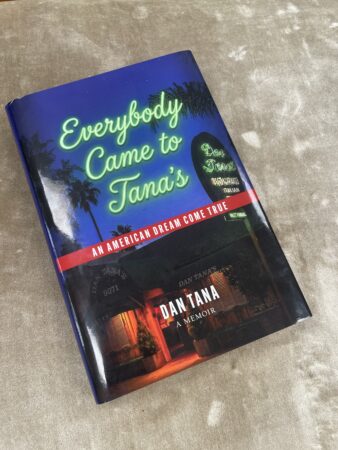
| Author | Dan Tana |
| Genre | Memoir |
| Language(s) | English |
| Format | 384 Pages |
| Publisher | Radius Book Group |
| ISBN | 9798895151099 |
Reviewed by Katerina Tana
Note: For the sake of full transparency, I preface this review with the fact that this book, Everybody Came to Tana’s is my father’s memoir.
While being father to two daughters, my sister and myself, was his professed greatest pride, it was perhaps the least extraordinary part of his life. When you read this book you will appreciate why. It was his indomitable and inimitable spirit that distinguished him as a man. While his success and fame as a restaurateur of the eponymous Dan Tana’s restaurant is what he is famous for, his accomplishments in the worlds of football and filmmaking, as well as his incomparable generosity, decency and sense of play, were his finest traits. Surrounded by celebrity and high powered wealth, his sense of self and values never wavered.
Our father lived a very different life. Most people, some of them close friends, had no inkling of the trying and sometimes death-defying episodes he survived. The challenges and struggles close family are privy to don’t often make it beyond the familial circle. Indeed this is why it was so important, knowing he was one of the world’s great raconteurs, that his memoir, which he laboured over for several years, had to be shared even after his passing last summer at the age of 90.
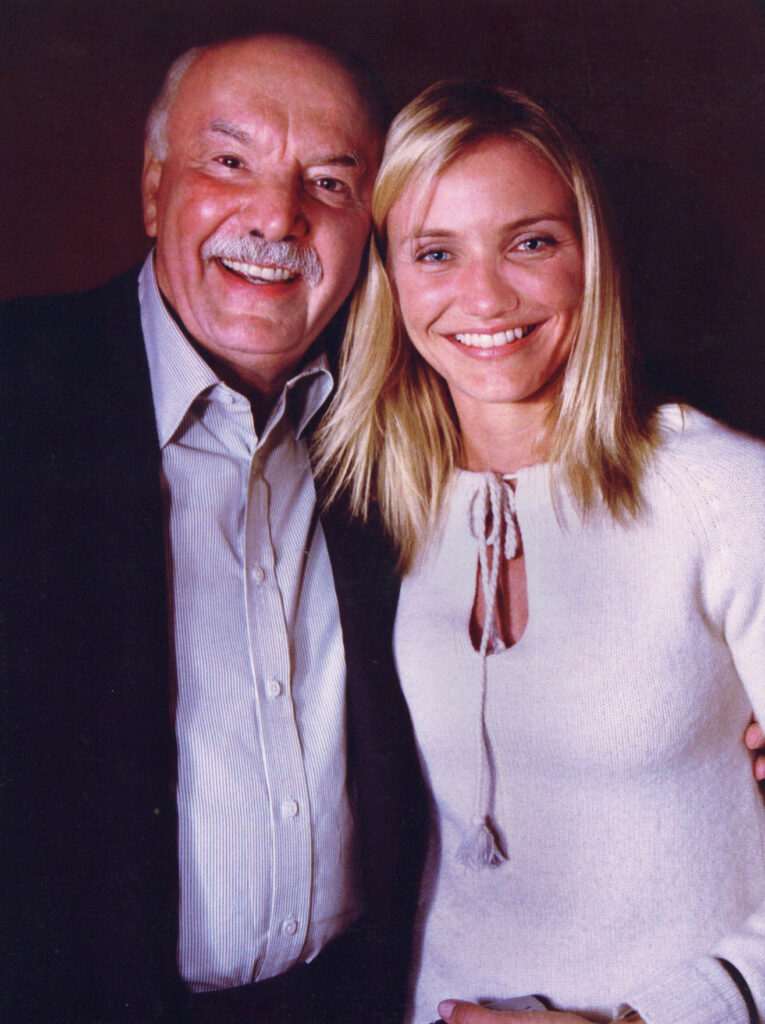
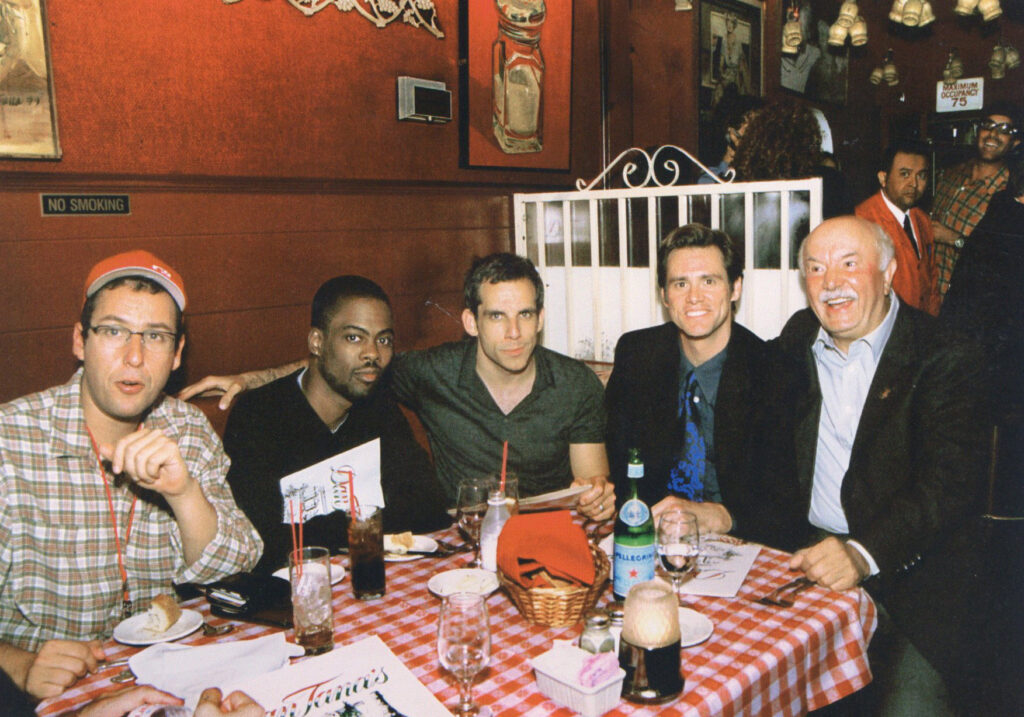
Left: Dan Tana and Cameron Diaz; Right: Dan Tana and Adam Sandler, Chris Rock, Ben Stiller and Jim Carrey gathered at table in 2001
In 1935 Dan Tana was born Dobrivoje Tanasijevic, nicknamed Bata, in what was then Yugoslavia, now Serbia.
He was born in a field in the countryside, Cibutkovica, where his mother had retired from the city of Belgrade during her late pregnancy. As she helped farmers work the fields the unexpected delivery of her first child occurred, his umbilical cord cut with a scythe. Mother and son returned to the city where his father Radojko, ran the family restaurant, a successful business of his own father, until political matters carried him off to prison camps, where he remained during most of Bata’s childhood.
In his father’s absence Bata played football (soccer) on the streets with his friends, where he was discovered by legendary talent scout for Red Star Belgrade, Aca Obradovic. Football became Bata’s passport and greatest love. He professed to be grateful that he discovered football before he discovered girls. His talent at the game catapulted him at age 17, from the confined Communist world of post war-torn Yugoslavia to play in Belgium for Red Star in a European club competition. There, confronted by the consequences of taking to the dance floor in a post match gathering, he decides to defect with a fellow player. You couldn’t make it up.
A person with no citizenship
This decision forces him to navigate the dangers of being a person with no citizenship, landing him in Valka Lager displaced person camp in Nuremberg, Germany and a stint in a coal mine and finally being placed at Anderlecht in Belgium, then AC Hanover a team in Germany, where his football talent was recognised. Contracted by the club, his career trajectory was interrupted by the rules of FIFA due to both his young age and lack of nationality. His entire life at this point was bound by FIFA rules as this was the legal framework dictating his movements, where and when he could play and for whom. When he was sold to a Jewish team, Hakoah in Montreal, Canada he made his passage there by ship. Once there he juggled with the various languages learned along the way and befriended a mixed bag of fellow immigrants. Along the way he mastered the game of poker supplementing the healthy income he earned as a professional football player, making him ripe for adventure.
When the opportunity came to visit the USA for a bachelor party excursion across the border to San Francisco, he seized the moment. He decided to stay longer with one friend and together they made their way by bus south to see Hollywood, a world he grew up watching in movies in post war Belgrade, which fueled his dreams of what was possible.
What followed was his immigrant journey through 1950’s LA, waiting tables, washing dishes, rubbing elbows with celebrities, (James Dean, Paul Newman, Marilyn Monroe, Bob Mitchum among many others), while playing professional football. Not long after he landed some acting work in a few films and tv shows, at which time he agreed to a name change, at Twentieth Century Fox casting’s suggestion, to Dan Tana. All the while he pursued the establishment of a first professional US soccer league, but then in 1964, married and with a new baby, entirely by chance and necessity, he opened the restaurant that was to become the stuff of legends.
In 1972, just as his restaurant started to garner a loyal following he chose to relocate the entire family to England, where his daughters could have a “proper” education and he could explore the possibility of involvement in the professional English Football league. In 1974 he became the first ever foreign chairman of a professional English club, astonishing to think given that most English teams are now in foreign hands. He chose the humble, struggling at the bottom of the fourth division, and bankrupt west London team Brentford FC. They wore a similar kit to his beloved Red Star and the challenge of their lowly status didn’t deter him. Needless to say under his watch they got promotion to the Third Division, and he is credited for shifting the energy at the club to a family oriented one and improved their presence in the community. The team is now in the Premier League….
He managed to juggle a dual existence between London and LA, without skipping a beat returning to LA every six weeks for two weeks, and nary a soul save his closest family and friends knew the drill. This was the freedom he cultivated and craved throughout his life, while one day he is at the restaurant host to the most high powered studios executives and stars of the time, the next week he was in London steering Brentford to a gradual success, while at the same time developing and producing feature films in his beloved Yugoslavia that garner fine reviews, one winning an award at Cannes.
How he connected these worlds come through the stories in the book. Like when an unknown Elton John debuts at the Troubadour a couple doors down from the restaurant, professing to be an avid football fan. Several years later, in 1977 our father and mother, are fast asleep at midnight in London when the phone rang; it was Glenn Frey of the legendary group the Eagles (regulars at the restaurant) asking him to come meet them and their friend Elton John who needed his football expertise to pick a new manager for his his team Watford FC. Our father got dressed and met them, counselled Elton to hire Graham Taylor, who he duly hired as manager, and the next few seasons followed making it to the First Division, the premier League of its time.
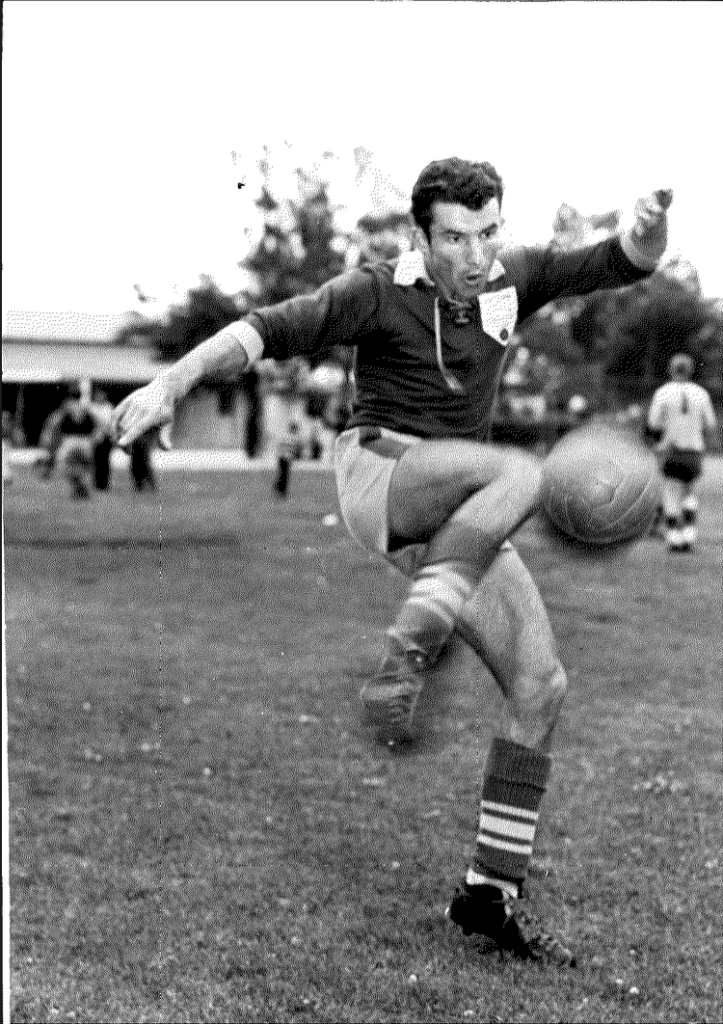
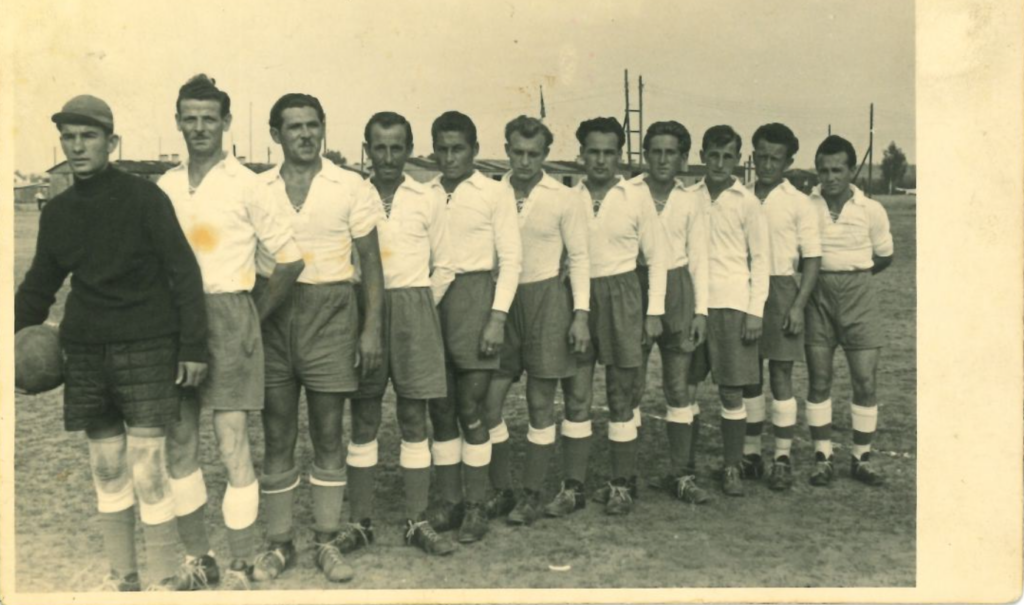
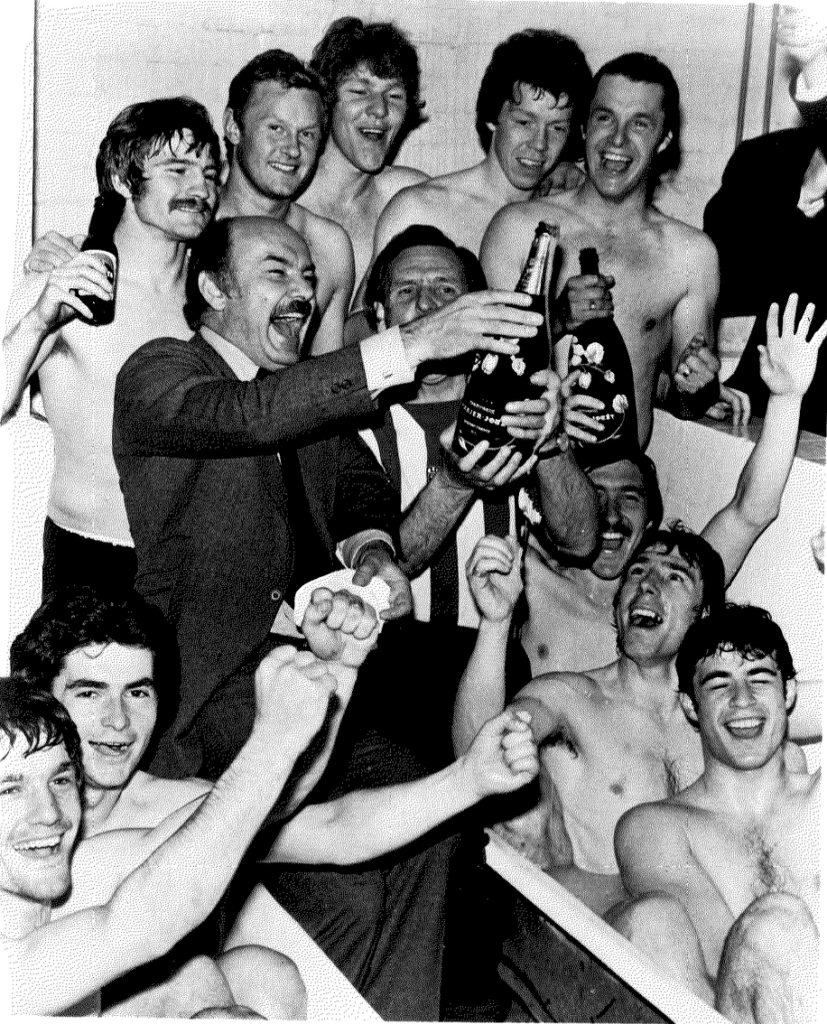
Left: Dan Tana playing for Yugoslav American team in Los Angeles, 1956; Center: Dan Tana as goalie at Valka Lager Displaced persons Camp, Nuremberg, Germany 1952; Right: Dan Tana as Chairman of Brentford FC celebrating promotion during the 1977-78 season, London, England
Our father’s memoir is first and foremost a testament to his ability to connect with people, and to remain optimistic in the face of daunting odds.
His motivation was informed by an American Dream that had more to do with freedom, to be who he was and go where he wanted, than amassing great wealth, as he was one of the least materialistic people you would ever meet. He had impeccable intuition and instincts, a deep love of people, and held true to the end to the belief that we are all connected.
You can find Everybody Came to Tana’s: An American Dream Come True at an independent bookstore near you.

Katerina Tana is an actor, writer, director, and designer, based in Venice Beach, California. A native Angeleno, she grew up in London and the former Yugoslavia. She wrote and directed the award-winning short film The Tip, and recently played King Henry IV in Henry IV to sold-out houses at Pacific Resident Theater.
SUPPORT SEEFEST
Not a member yet? Become an art patron with other SEEfest arthouse aficionados in support of great events and programs. Our mission is to keep you informed about initiatives from our wide network of fellow cultural organizations.
We Welcome YOU!